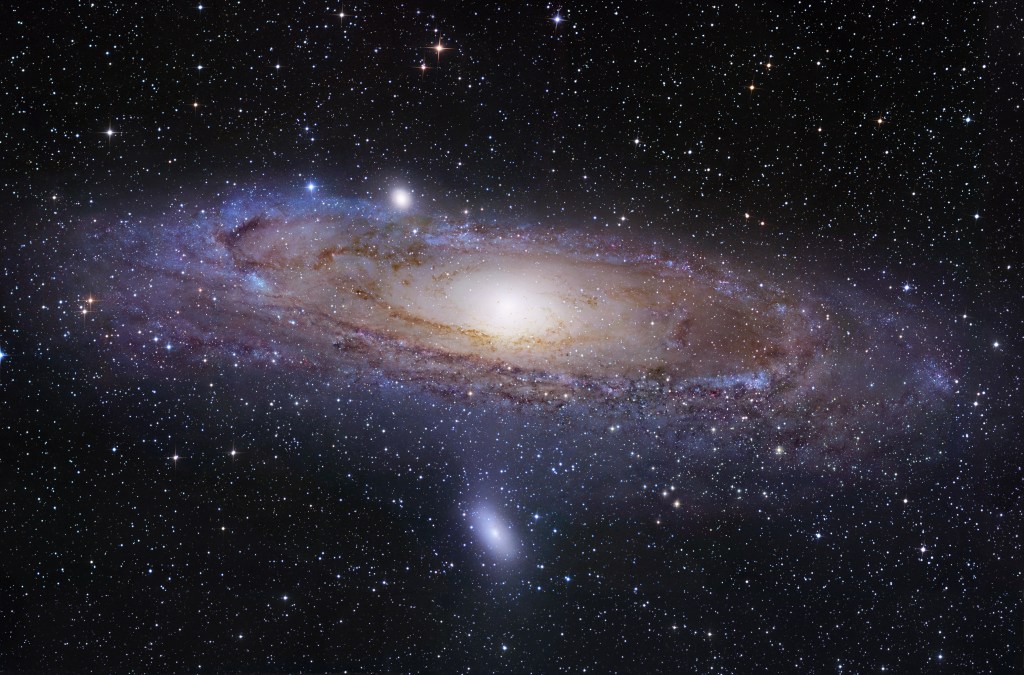
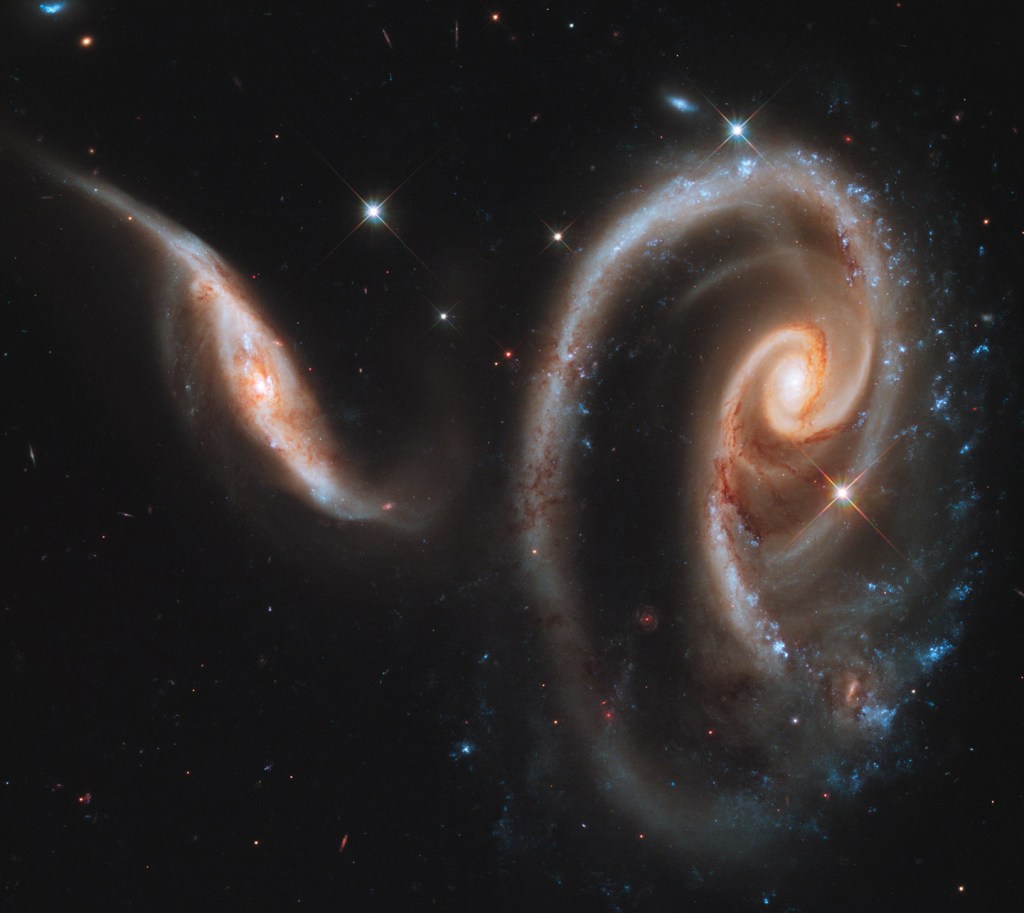
Outer space is one of the most interesting, but also terrifying places in the universe. What makes it scary is how unknown it is, people tend to be afraid of the things they don’t know or understand. From my own perspective, I know the unknown things out there can be scary, you never know what could happen out there that can effect us here on Earth. And then of course, there are the things we do know about, the things we know are there but can’t predict what they are going to do.
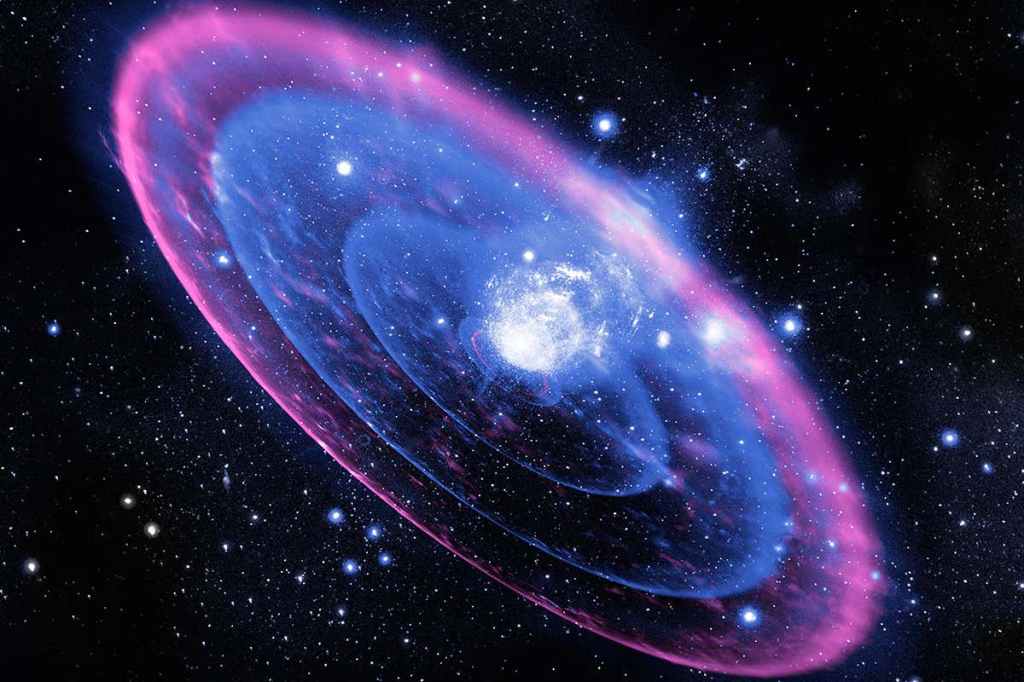
One thing scientist do know about and continue to explore are supernovas. As a child, I knew what a supernova was, but never understood why or how they occurred. When I was little, it was to my understanding that a supernova was an explosion that occurred when a star reached the end of its life, and essentially it is. A supernova is an interstellar explosion that can be categorized into two different types. The more known type (the one I understood as a child) is when a star reaches the end of its life. As a star is nearing the end of its life, it starts to run out of nuclear fuel. When this happens, the star’s mass starts to flow straight to its core. Eventually, the star will get so heavy that it can longer withstand its own gravitational force. The core then implodes in on itself and results in a supernova. The second, less understood type of supernova pertains to white dwarfs. A white dwarf is formed when a low mass star has exhausted all of its nuclear fuel and lost its outer layers. This second type of supernova occurs in a binary star system. Binary stars are two stars that orbit the same point. One of these stars is a white dwarf, and that star actually steals matter from its sister. Once the star has accumulated too much matter, it then explodes and results in a supernova. Basically, the white dwarf sucks the life out of the other (almost like a vampire).
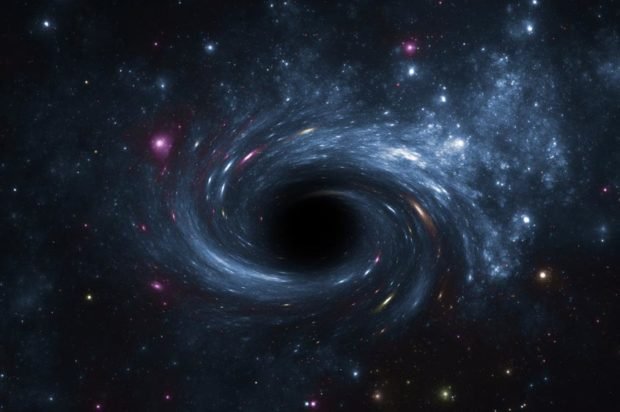
A very mysterious concept that is somewhat known to humans (and something I found scary as a kid) are black holes. As we understand it, a black hole is fundamentally some giant mass that sucks everything in and never lets anything out. The gravity in a black hole is so strong because all of its mass is compressed into such a tiny space. Due to the fact that light can’t escape, black holes are essentially invisible; only telescopes with certain tools can help find them. These tools can see how stars that are close to black holes behave differently than other stars. Black holes can range from being very big to very small. Scientists believe the smallest black holes are the size of just one atom. They are extremely tiny, but can have the mass of a large mountain. Another kind of black hole is called “stellar”, its mass can be up to twenty times that of the sun. The largest black hole is called “supermassive”, these can have masses that are more than one million suns together. Scientists have recently found proof that at the center of every large galaxy, there lies a supermassive black hole. The black hole that lies at the center of the Milky Way galaxy is called Sagittarius A. This black hole has a mass that’s equal to about four million suns. Some may think (and myself) that if there’s a black hole at the center of our galaxy, won’t this black hole suck everything (including us here on Earth) in? The answer to that question is no. Black holes can only consume things that fall into its gravitational force. The universe is constantly expanding, everything is spreading out. There is currently no proof as to how black holes are formed, however, there are theories. Scientists hypothesize that stellar black holes are made when a star explodes resulting in a supernova. Scientists also think that supermassive black holes were formed at the same time as the galaxy they are in.
The universe is a very vast and constantly changing place. A certain theory that I’ve recently thought and read about pertains to the universe, actually, a multiverse. Is there more than one universe?
Until next time…
Dunbar, B. (2015, May 21). What Is a Black Hole? Retrieved from https://www.nasa.gov/audience/forstudents/k-4/stories/nasa-knows/what-is-a-black-hole-k4.html
May, S. (2015, June 1). What Is a Supernova? Retrieved from https://www.nasa.gov/audience/forstudents/5-8/features/nasa-knows/what-is-a-supernova.html
 Astronomy Tomorrow